

There are brands that explain their products. And then there are brands that express their philosophy through spaces. The Swedish legal-tech brand Legora clearly belongs to the latter category. From the very first visit to the website, it becomes obvious that this is not simply about presenting software. Instead, users are invited into a world of warm light, dark woods, sculptural lighting, and interiors that feel far closer to a boutique hotel in Stockholm than to a traditional law firm or technology company.
Perhaps that is exactly what makes Legora so fascinating: through its imagery and films, the brand has created its own interior design language. A visual identity that feels instantly recognizable and runs consistently through every piece of content. Whether the actual offices truly look like this in everyday life or whether some of the spaces were carefully staged for campaigns and photo shoots almost becomes irrelevant. What matters is that Legora understands how deeply interiors have become part of a modern brand world today.
And that is precisely why the imagery feels so exceptionally premium.
Nothing about it resembles the typical aesthetic often associated with legal-tech companies. There are no exaggerated visions of the future, no aggressive color palettes, no sterile technology-driven environments. Instead, what dominates is a calm, almost slowed-down atmosphere. The spaces feel intelligent, cultivated, and remarkably clear. It is a form of luxury that does not need to be loud in order to be noticed.
Perhaps this is the perfect way to describe the new aesthetic of modern premium workspaces: Legal Luxury Scandinavian.
What stands out most is how strongly Legora draws inspiration from Scandinavian residential architecture. The interiors feel less like traditional workplaces and more like private libraries, boutique design hotels, or carefully curated apartments in Stockholm or Copenhagen. Dark walnut wood meets natural stone, leather contrasts with brushed metal, matte surfaces blend into soft textiles. Even large conference rooms maintain an intimate atmosphere. Technology intentionally fades into the background. Monitors never dominate the space, cables remain invisible, and digital devices almost appear secondary.
At the center of everything are materials and light.
Light, in particular, plays a central role throughout the entire visual universe. While traditional office spaces often aim to appear as bright and functional as possible, Legora works with shadows, warm pools of light, and an almost cinematic atmosphere. As a result, the interiors no longer feel like workplaces, but rather like spaces designed for focused thinking.
This becomes especially striking in the choice of lighting. Again and again, iconic Mid-Century objects appear that feel less like functional lamps and more like sculptural design pieces. Few objects embody this aesthetic as perfectly as the legendary Snoopy Lamp by Flos. With its glossy green metal shade and heavy white marble base, it has become one of the great classics of Italian design. Originally created in 1967 by Achille Castiglioni and Pier Giacomo Castiglioni, the piece still feels remarkably contemporary today.
Within these interiors, the Snoopy lamp functions less as a simple light source and far more as a cultural statement. It introduces warmth, intellect, and personality into the room without ever feeling decorative or overly staged. That exact balance seems to define the entire aesthetic language of Legora.
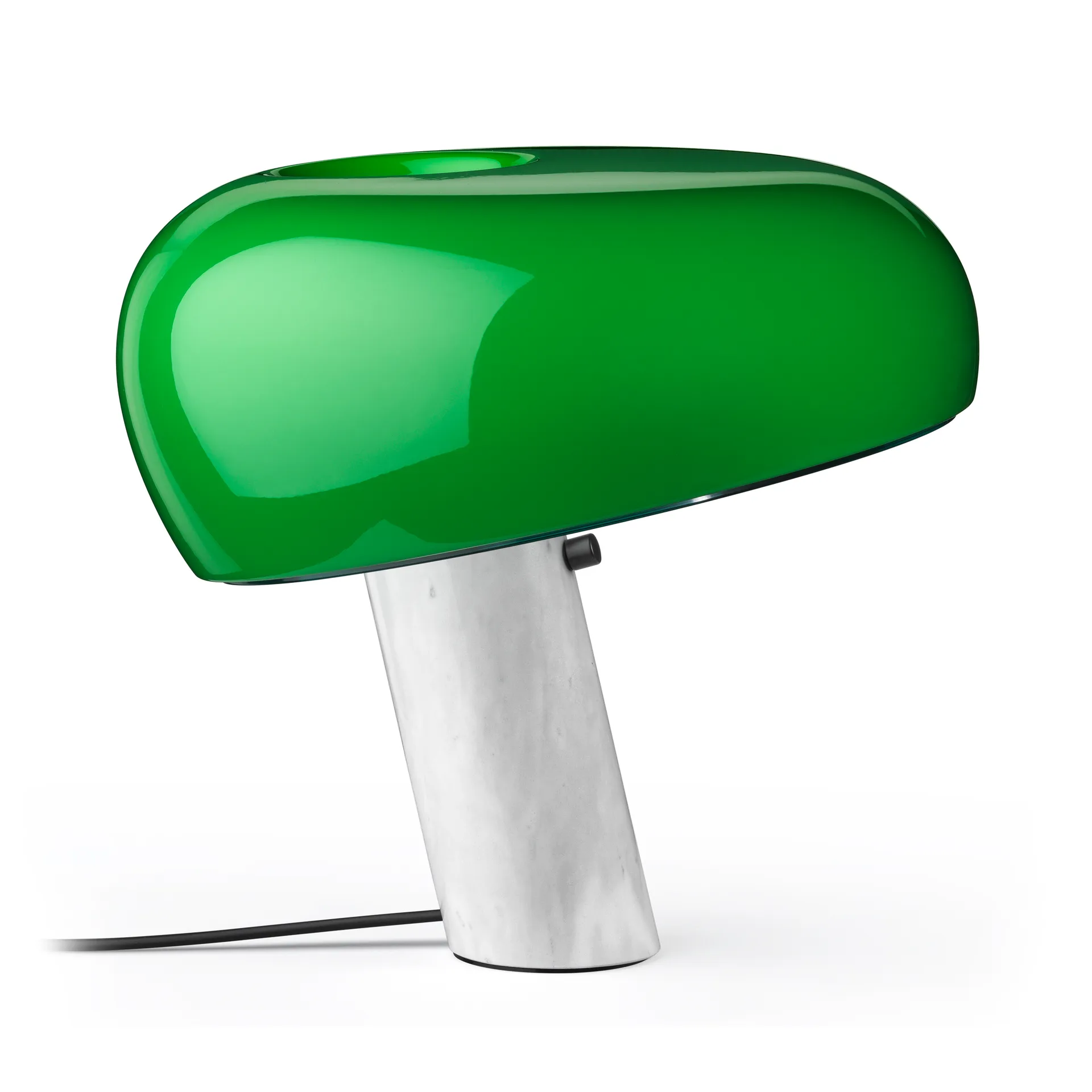
Discover the Snoopy lamp at Nordic Nest.
The rest of the interior follows this philosophy just as consistently. Shelving is not filled for functionality alone, but carefully curated. Art books, ceramic objects, and intentionally placed empty spaces create the quiet sense of tension that often defines truly high-end interiors. Many areas are deliberately left untouched — and it is precisely this restraint that creates a feeling of calm.
It is an aesthetic that does not try to impress, and perhaps that is exactly why it feels so luxurious.
It is an aesthetic perfectly complemented by brands that have represented Scandinavian design culture for decades: Carl Hansen & Søn, Louis Poulsen, Audo Copenhagen, GUBI, or Fredericia. What connects them all is the same idea of timeless materiality, exceptional craftsmanship, and an elegance that never needs to become loud.
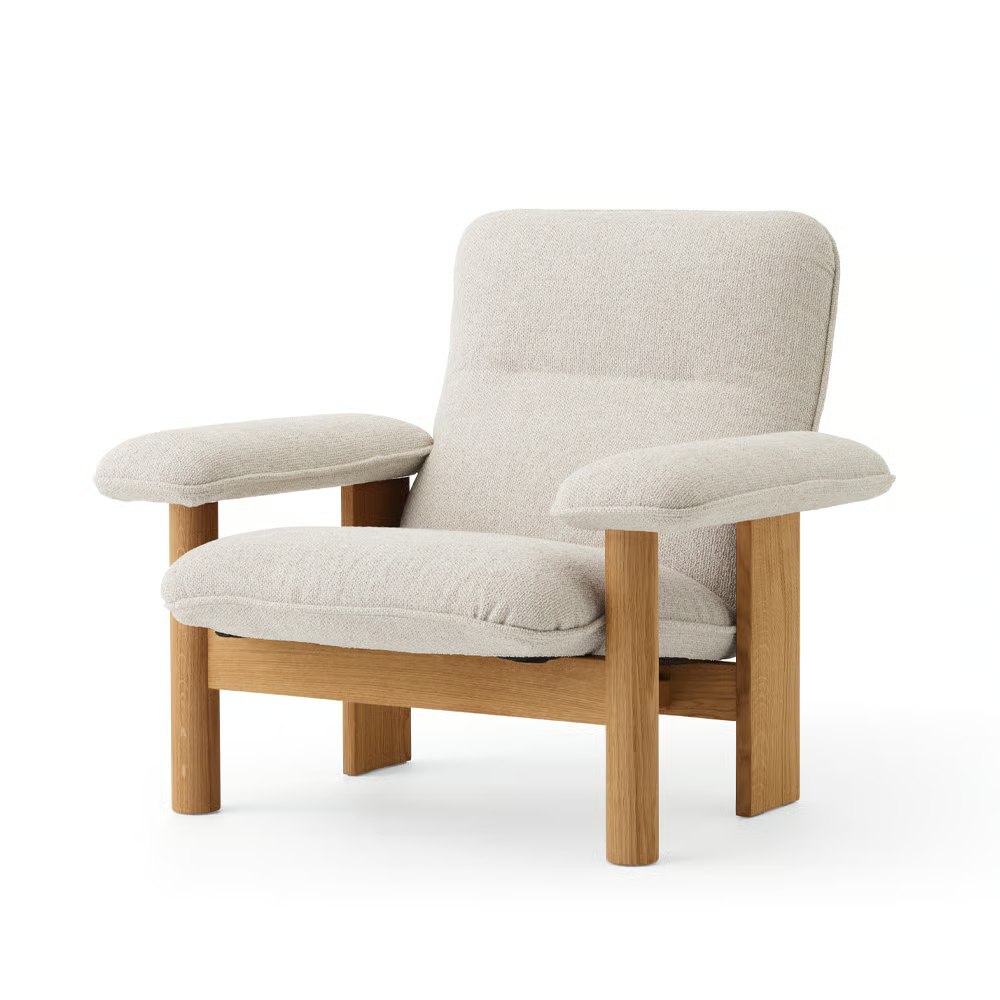
Brasilia Sessel von Audo Copenhagen
Perhaps that is exactly why the Legal Luxury Scandinavian aesthetic feels so relevant right now. In a world shaped by constant overstimulation, luxury is no longer defined by excess, but by calmness. Spaces are once again allowed to feel soft. Personal. Almost residential. And it is precisely this atmosphere that creates a sense of professionalism.
Legora demonstrates impressively how deeply interior design has become part of a brand’s identity today. Interiors often communicate values more subtly than any campaign ever could: focus, precision, trust, and composure.
Or, put differently: the future of modern law firms may look less like an office — and more like a carefully designed home.